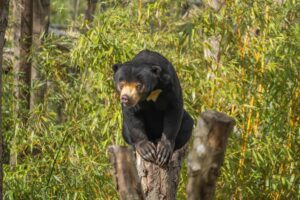
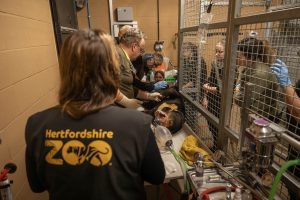
Kyra, who forms part of an essential European conservation breeding programme, underwent surgery to remove a cyst from her womb, an issue believed to be at the root of her ongoing fertility challenges. Despite being paired with male sun bear Indera since April 2023, the pair have been unable to conceive, prompting the zoo’s veterinary team to investigate further.
An ultrasound scan on 19th November 2024 revealed multiple cysts, leading specialists to conclude that surgical intervention offered Kyra the best chance of future breeding success.
A Critical Procedure for a Globally Vulnerable Species
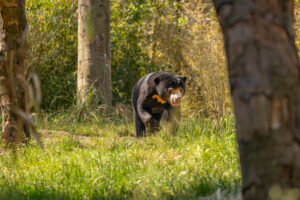
Sun bears (Helarctos malayanus) are currently listed as Vulnerable on the IUCN Red List, with fewer than 10,000 individuals remaining in the wild. Their European population is even more precarious: the EAZA (European Association of Zoos and Aquaria) recorded just 34–38 individuals, underscoring the importance of every breeding opportunity.
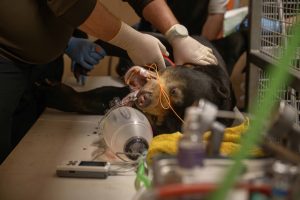
Recognising the significance of Kyra’s case, Hertfordshire Zoo brought in leading specialist wildlife surgeons from Germany to perform the one-hour operation. Kyra, who weighs around 75kg, was placed under general anaesthesia and carefully monitored throughout by the zoo’s Head Veterinarian. She will continue to be observed closely over the coming days to ensure a smooth recovery.
“This is a complex and unusual procedure, but one that is vital for Kyra and for the international breeding programme,” said Tyler Whitnall, Managing Director at Hertfordshire Zoo.
“If this operation is successful, it offers a real chance to boost the European population and contribute directly to the survival of this incredible species.”
Why Sun Bears Need Our Support
Sun bears are the smallest of all bear species and are known for their striking golden crescent-shaped chest patch, believed to symbolise the rising sun. Native to the dense tropical forests of Southeast Asia, they play a vital ecological role but face severe threats from habitat loss, deforestation, and illegal wildlife trade.
Despite their small stature, sun bears are incredibly strong. They use their muscular limbs and sharp claws to tear into trees in search of insects, while their impressively long 25cm tongues allow them to reach honey and termites hidden deep within crevices.
With populations declining and their European captive numbers extremely limited, successful breeding within conservation programmes like the one at Hertfordshire Zoo is essential.
Supporting Conservation Through Every Visit
Hertfordshire Zoo remains committed to the long-term protection of threatened species through expert veterinary care, scientific breeding programmes, and global conservation partnerships. Visitors play a vital role in supporting this work.
Every visit, membership, and donation helps fund the zoo’s ongoing animal care and conservation initiatives.
Book your day tickets to Hertfordshire Zoo today.